The Times Won't Say "Lie" - Here's Why That Matters

When Neutral Language Isn't Neutral: What a New York Times Editor Revealed About Belonging and Power
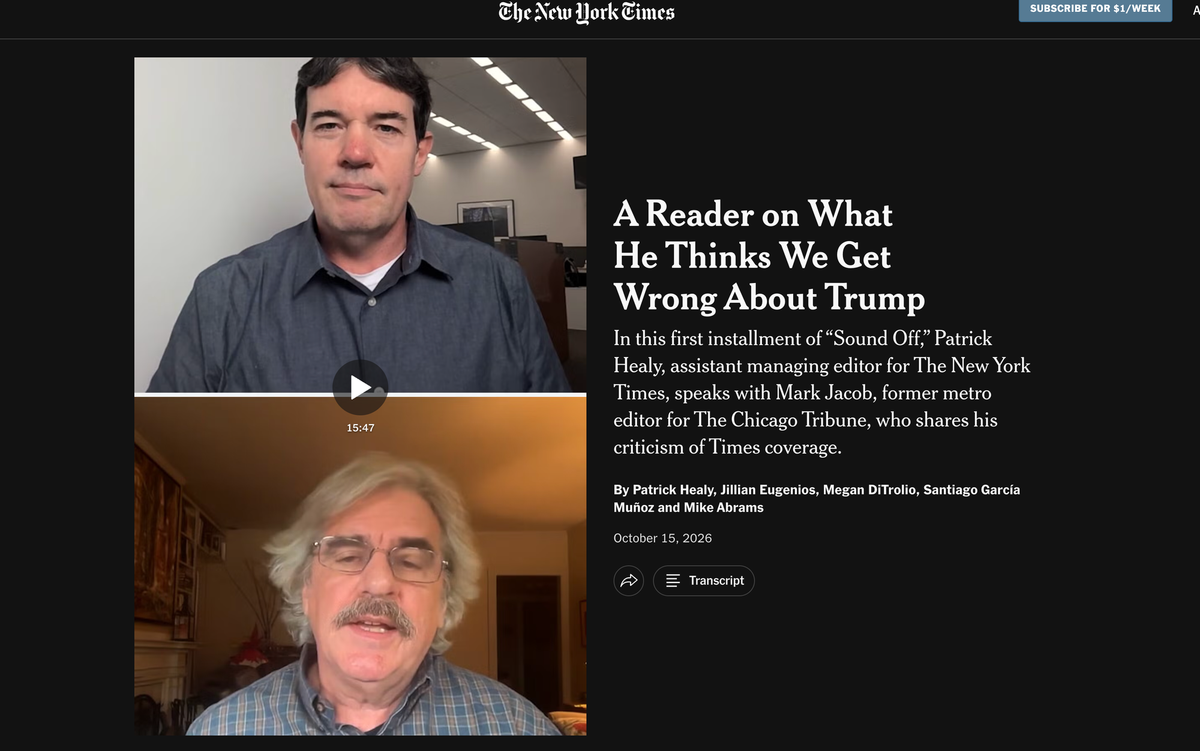
Language does more than describe reality. It tells people whether their safety, their fear, and their lived experience are allowed to be named plainly or whether they need to be managed, softened, and filtered through someone else's comfort. That's the real subject underneath a recent exchange between Patrick Healy, assistant managing editor at The New York Times, and Mark Jacob, a former Chicago Tribune metro editor, in the first installment of the Times' new "Sound Off" series.
On the surface, it's a conversation about word choice in political coverage. Underneath, it's a case study in how institutions protect their own comfort while calling it objectivity, and why that matters for anyone who shares my concern about our democracy and our country.
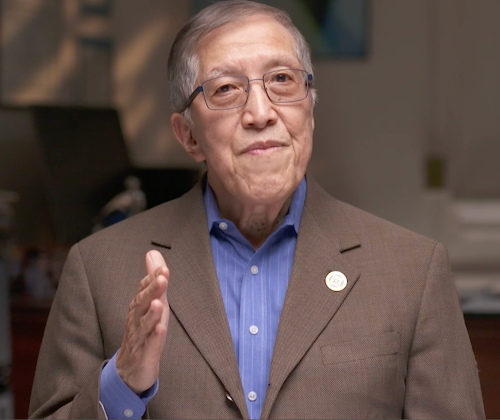
As you may have noticed in my previous posts, I'm interested in journalism and how mainstream media outlets are not meeting the Trump authoritarian moment by softening their reporting on him and the impact he's having on people and communities. I appreciate that Jacob brings his years of experience in the newsroom as an editor to criticize the Times - "by using euphemisms as The NY Times does, it tends to minimize. It tends to sand off the sharp edges of things. And this is not any normal kind of political time. This is one of the biggest crises in American history. And yet The Times, for example, instead of saying that Trump is doing corrupt acts, it says he’s moving the ethical lines or he’s sidestepping norms." Watch this 15 minute 'Sound off' here, with the sound on! 👇🏽
Watch this 15 minute video in which Mark Jacob confronts an editor at the Times. Jacob, and millions of others, can see that Trump is "assaulting democracy," but the NY Times refuses to name it, choosing words that soften and minimize the danger.
The Context
Mark Jacob came to the Sound Off with a specific grievance: a Times story about former press secretary Karoline Leavitt which described her as "fierce, steely, nimble," without naming that she repeatedly lied to the press, including calling a woman killed by ICE in Minneapolis a "lunatic" and a "domestic terrorist." From there, Jacob widened the critique to the Times' broader pattern of language around Trump: calling corrupt acts "moving the ethical lines," calling his false statements "untethered to truth," calling the claims to grab Panama and Greenland an effort to "expand America's footprint.”
Jacob's core argument is simple and sharp: the Times has excellent investigative reporters, but it refuses to present what they find in a direct statement of what's actually happening, which Jacob accurately names as Trump "assaulting democracy."
The #BrokenTimes
The New York Times is the largest newspaper in the world. It has the money, the staff, and the institutional weight to produce investigative journalism that smaller outlets simply cannot match, and it does, regularly. But resources that deep make the language failure harder to excuse, not easier. A newsroom with this much capacity isn't struggling to find the right word for what's happening in Washington. It's choosing a softer one.
And that makes me wonder: does the Times believe that writing in moderate language will somehow produce a more moderate country?
Headlines like "Trump moves the line" or describing a land grab as an effort to "expand America's footprint" don't read as careful to me. They read as an institution hoping that if it describes the fire calmly enough, the fire will behave calmly too. It won't. Vague headlines don't make an authoritarian less authoritarian, they just make the danger harder for readers to see until it's standing in the room with them.
Media critic Jeff Jarvis has been naming this same pattern for a while now, calling it the #BrokenTimes, and he weighed in directly on this exchange between Healy and Jacob. Watching Healy defend the paper's caution by appealing to the trust of administration sources, Jarvis wrote plainly that this reveals "the corruption of access journalism." That's the heart of it. When an institution with this much reach chooses words that protect its relationships with the powerful over words that tell readers the truth, it isn't neutrality, it's a trade, and We the People are paying the price in loss of trust and truth.
Jacob's strongest point is that euphemism isn't neutrality, it's a kind of softening that changes what readers understand to be true. When he says the Times should write a headline stating plainly that Trump is assaulting democracy "because it's damn true," he's naming that avoidance has a cost, and that cost falls hardest on the public's ability to recognize danger in real time.
He also names something structural: individual stories about individual acts of corruption don't add up to the same thing as a paper willing to "hit the total button," his phrase for naming the cumulative pattern rather than treating each act as a discrete, isolated incident. That distinction matters anywhere people are trying to track harm that accumulates slowly enough to be denied at every single step.
Healy's Defenses, and Why They Don't Hold
Healy's response rests on a set of arguments that don't hold up under their own logic. He frames the choice as either reporting facts or using "potent" language, as though a newsroom can't do both. This is a false binary Jacob rejects outright. Healy argues that calling something a "lie" requires knowing Trump's intent. He suggests that overusing strong words would drain their "potency," an argument that only makes sense if truth-telling is treated as a scarce resource to ration rather than a responsibility to meet each time the moment calls for it.
The most revealing moment comes when Healy asks whether Jacob would rather the paper render "a verdict" or keep "sources who trust us," adding, "I don't think you can play all of these different roles at the same time."
This is truly wild. Healy's admitting that their use of restrained language isn't a journalistic principle or a style choice, it's a strategy for preserving access to the powerful people being covered. He's saying that the institution's relationship with conservative readers and with sources is a critical factor - it actually shapes their reporting and thus, influences what the public is allowed to understand as true.
My Takeaway
When I consider the power and impact of The New York Times, I think it's important to get above the content and consider context. What is the challenge of our time, and who is being impacted the most?
Every outlet and every reader can make their own assessment, and in this wide media world, there are outlets that will meet mine. But The Times should be different. It is the Fourth Estate, the biggest voice in the room, with the resources and the readership to be the biggest voice for democracy and to hold power accountable. This is where it fails. It plays nice with Trump and his administration for the sake of access, and access has a price, paid by the public that depends on this paper to tell them the truth.
Journalists who played nice with Hitler, Stalin, Mussolini, and Duterte told themselves the same story the Times is telling itself now: stay credible, stay useful, stay in the room, and the access will produce more truth later than confrontation would now. History has not been kind to that bet.
There's a double standard worth naming here too. The same paper that reaches for "untethered to truth" and "moving the ethical lines" when describing the president has no trouble using direct, unsoftened language when describing the people his policies target. Immigrants are "illegal." Crime in Black and brown communities gets covered in blunt, often damning terms. The softening isn't a universal house style applied evenly across every subject. It shows up specifically when the person being described holds the most power in the country. That tells you the caution was never really about precision. It was about who the paper is protecting.
When the largest newspaper in the world chooses softer words for the powerful to preserve its own access, it is deciding whose comfort matters more than whose safety does. It reports on thousands of people held in what are, by any honest description, concentration camps, while softening the framing of the policies that put them there. That is not a functioning democracy's press doing its job. That is a press deciding neutrality means never finishing the sentence it already has all the facts to finish.
Lastly, watching two experienced journalists spar over a single word like "lie" is really a window into how power and privilege get negotiated at the level of language, long before it ever reaches a headline.
A big thank you to Mark Jacob for his educated and passionate argument in the Sound Off. What he did is not easy, and he showed us all how to bring specific examples to the table and speak up to hold power accountable. After all, silence is complicity.
Links to explore more:
Follow Mark Jacob on Bluesky @markjacob.bsky.social and subscribe to his newsletter here: https://www.stopthepresses.news/
Dan Froomkin on Bluesky @froomkin.bsky.social and his newsletter: https://presswatchers.org/
Media critic, Jeff Jarvis on Bluesky @jeffjarvis.bsky.social and his site: https://jeffjarvis.com/
And you can follow me at Bluesky here: @sunshowerlearning.bsky.social