Corruption is why things don’t work for the American people

Corruption doesn't usually arrive as a single scandal big enough to stop the country. It arrives as a drip, one story a week that's shocking enough to trend for a day and forgettable enough to be replaced by the next one before anyone adds them up. That's not an accident. It's the business model. A single headline is easy to dismiss as noise. A pattern is harder to ignore, which is exactly why no one in power wants you counting.
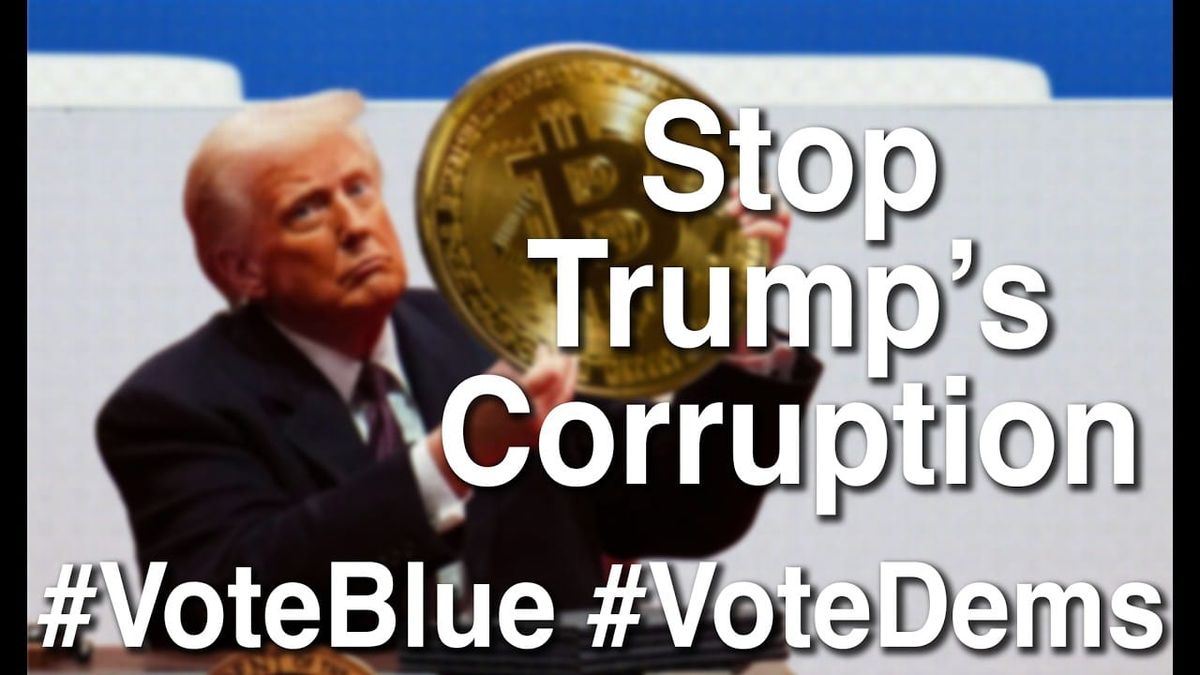
This is my new video "Stop Trump's Corruption" and in just one week, it's old news because everyday there are new reports about bribes, extortion, pay for pardons and more.
Here's one: Venezuelan billionaire named Julio Herrera Velutini pleaded guilty to a campaign finance violation tied to an alleged bribery scheme involving Puerto Rico's governor. Weeks after his family's companies signed a contract guaranteeing more than $50 million to Alina Habba, Trump's former personal attorney, who at the time held a senior advisory post inside the Justice Department overseeing U.S. attorneys, Herrera received a full pardon. The money didn't arrive as a bribe with that word attached to it. It arrived as a job offer, a retainer, a legal fee. That's the drip: corruption dressed in enough paperwork to be deniable in a headline, even when the timeline tells its own story.
House Democrats have added up the fines and forfeitures wiped out by Trump's clemency grants = a total of $1,348,607,386, the overwhelming majority of it restitution owed to victims of fraud, not symbolic fines paid to the government. The reason this is important is that every dollar of restitution a pardon erases is a dollar a real victim, a defrauded investor, a patient, a retiree, was supposed to receive and will not. Corruption at this scale doesn't skip the public and land only on institutions. It lands on people who already lost once and are now told the debt owed to them simply doesn't exist anymore.
$1.4 Billion Crypto Scam
Meanwhile, the president disclosed more than $1.4 billion in cryptocurrency-related income last year alone, a sum earned while he simultaneously set the federal policy governing that same industry. There's a word for setting the rules of a market while profiting from it personally, and it isn't a coincidence or a conflict of interest footnote. It's the arrangement working exactly as designed.
A culture of belonging asks a specific question underneath all of this: who gets to belong inside the decision, and who only gets to live with its consequences. Right now, access belongs to whoever can afford the retainer, the super PAC check, the introduction to the right lawyer. Consequences belong to everyone else, the person whose restitution check never comes, the patient whose medicine costs more because a merger got approved for the right price, the voter told that corruption is just how things work now and we should all give up on expecting better.
Look Over Here
They want us all to feel worn down into not tracking the corruption. Every time the drip gets normalized instead of counted, the people with access get another one free. Belonging means refusing that exhaustion on purpose, naming the pattern out loud, and treating each new story not as noise but as evidence being added to a case that's already strong enough to act on.
Unfortunately, as soon as I click "publish," this list of corrupt acts will already be obsolete, with a new, incredible level of corruption exposed.
Thank you for reading! Make sure to check out some of the other articles and let me know what you think.