Why Fascism Feels Like Relief (for some)

On being wired for fascism, neuropolitics, and the work of belonging
This piece started with a question that I've been thinking about a lot: why does fascism keep coming back? Why has the false promise of certainty become so seductive in moments of economic precarity, social rupture, climate dread, and democratic erosion?
Then I came across Dr. Liya Yu's book Vulnerable Minds: The Neuropolitics of Divided Societies (Columbia, 2022), and her argument cracked something open for me — the appeal of authoritarianism is partly neurological. What follows draws on her thinking and adds my own reflections on what this means for the work of belonging. I'd love to hear what it stirs in you.
There is a question underneath all the anguish about rising authoritarianism, rising fascism, rising dehumanization of the people least protected by power. The question is: why does it keep working?
Why do ordinary people, generation after generation, give their consent, their votes, their money, their sovereignty, their silence and their cheers to leaders who promise certainty even when the certainty is a lie, even when the cost is at their own expense or someone else's erasure?

The pro-Nazi German American Bund packed Madison Square Garden with more than 20,000 people on February 20, 1939. This isn't Berlin, it's New York City. Fascism isn't a foreign disease or an ancient blight that's been eradicated. It has always been here, and... it's back.
The problem is not, at root, that those people were just stupid, bad or evil. Perhaps there is a neurological dimension at play, and if we are serious about belonging and about building societies in which people can actually live alongside one another, we have to face it.
What Dr. Liya Yu saw in Charlottesville
In the fall of 2016, Dr. Yu was teaching a course at the University of Virginia called The Political Brain. A neuropolitical philosopher who grew up between Germany and China, Dr. Yu had brought together pro-Trump and anti-Trump students into one classroom. Sitting next to each other were students who were wealthy and working-class, immigrant and old Virginia elite, LGBTQ+ and those who disagree with their rights, to talk about prejudice, racism, police violence, and what it takes to be seen as fully human.
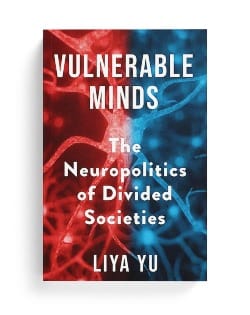
In her book, Vulnerable Minds: The Neuropolitics of Divided Societies, Dr. Yu writes about walking through town to class and feeling a "naked fear" in her Asian female body as she saw pickup trucks drive by with Confederate flags. She took in the Jeffersonian architecture all around her and reflected on the beauty created from the violence of slavery. Months later, on those same streets, in August 2017, during the Unite the Right rally, a Neo-Nazi drove his car into a crowd of counter-protestors and killed Heather Heyer.
But that fall semester, in that classroom, something held. Tension flared. No one walked out. What kept the room from rupturing into the same break happening everywhere else in the country was not civility and it wasn't tolerance.
Dr. Yu writes that what kept the students in that room open-minded was the recognition of shared neurobiology. That we all have a similar brain and are equally susceptible to being influenced by threats and fear, and equally capable of dehumanizing others. Yu's claim, and it is a strong one, is that "we all need to be in charge of our dehumanizing tendencies within our brains, even though we might never be able to fully overcome them."
Her pro-Trump students told her they would never have taken a "liberal" class on racism if it hadn't included the neuroscience component, because the brain offered "a more objective and less contentious lens." It let them admit to their own dehumanizing brains without first being shamed for them. And once they had admitted it, she could press them on the political consequences.
The neurological promise of fascism
Before going further, I want to name something: the neurological story is one explanation among several. Other explanations for the pain that pulls people toward fascism include extreme economic stress and messages that scapegoat immigrants, refugees, and racial minorities as the cause of that pain, and leaders who know exactly how to weaponize that pain into political consent.
These explanations are not in competition with the cognitive one. They are entangled with it. Material desperation and engineered scapegoating create the conditions in which the brain's threat circuits are most easily exploited. The neurological story is compelling, and it is partial. Let’s hold both.
With that said: from this perspective, fascism is not just an ideology. It is a neurological promise. It says: I will end your uncertainty. I will tell you exactly who the enemy is, exactly what is true, exactly who belongs and who does not.
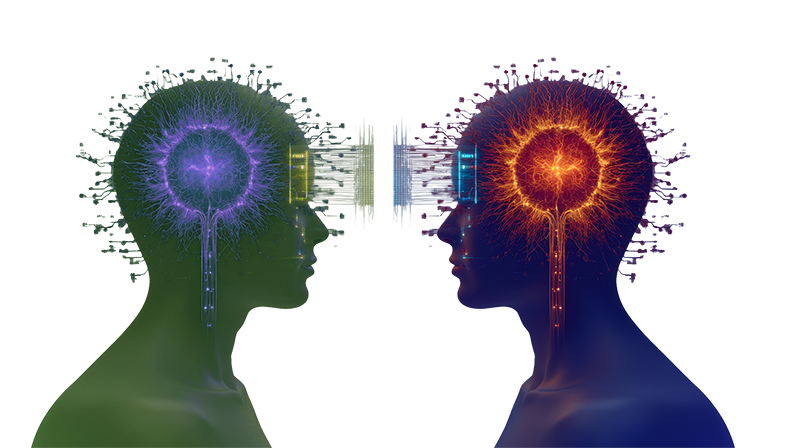
Researchers studying brain-to-brain synchrony have found that people who score high on intolerance of uncertainty show greater neural alignment with politically like-minded peers, and lower alignment with political opponents. The harder a brain finds the experience of not-knowing (uncertainty), the more it locks into in-group thinking and the more it shuts everyone else out.
The amygdala, the ancient threat structure, finds relief in being told whom to fear.
Following this thread, Dr. Yu makes the case that when you are told whom to fear — for example, "those people" — it is not a moral failing entirely. It is a cognitive failing, and it lives in everyone, at different intensities.
And though I keep using the word "cognitive," what we are actually describing is cognitive-emotional. Threat is not processed as cold information. It is felt in the body — as dread, as panic, as the bodily relief of finally being told what to do about it. This is part of why argument alone does not move people. You cannot reason someone out of a sensation their nervous system is producing.
Which means the fascist who tries to invoke fear about "those people" is not breaking our brains. The fascist is exploiting something already there in all of us.
Fascist or authoritarian leaders, perhaps not consciously but in their gut, understand this terrain. They manufacture threat, amplify uncertainty, then sell their own brand of certainty as the cure. Whether or not they would call it that, they are running a neuropolitical strategy.

Donald Trump is the avatar of this gut-level cunning. He is not known for being intellectually smart (understatement), but he is shrewd in the way a conman is shrewd. He has an incredible instinct for what triggers fear, and he broadcasts it shamelessly until it crowds out everything else. Immigrants. Criminals. "The radical left." The elites who failed you. The fear becomes the message. The loyalty follows the fear. None of this requires intelligence. It requires a working sense of where the audience's amygdala lives, and a willingness to keep ringing that bell.
Triggering the amygdala
What Yu does that liberal moral argument keeps failing to do is meet the cognitive reality of the people she is trying to convince. Telling someone they are a racist activates the same threat circuits that fascism exploits. It triggers the amygdala. It closes the brain. The person stops listening, and often pulls toward whichever in-group promises to receive them without conditions, which, increasingly, is the right.
You can read the countless stories in the NY Times where they interview Trump voters in Iowa diners who say that the left makes them feel stupid, judged, called every name in the book — racist, sexist, deplorable — and condescended to by people who don't know their lives. Whether or not those impressions are fair is almost beside the point. What matters cognitively is that some people are received on the right while they feel they are not received by the left. To put it dramatically, the reception is the door, the ideology walks through after. But I digress.

Dr. Yu does not say moral arguments are wrong, or that current liberal and left traditions are without merit. She explicitly states she is not claiming the cognitive frame is the only approach. What she is claiming is that without a shared cognitive foundation, a recognition that everyone, including the most progressive among us, has a brain capable of exclusion, the moral argument cannot land.
This matters most for the hardest cases. Yu describes a low-income white student from rural Virginia, the first in his family to attend college, who said in class: "I get that racism and slavery are bad. But I don't get why I should be responsible for it. I can't see how I'm guilty just by being me." Some of his classmates rolled their eyes. But Dr. Yu didn't.
What she said back to him, eventually, was not a soft answer. She told him plainly that white privilege is real, that the redistribution of it is coming, and that "to a degree it will also be felt as a loss — and loss is always painful." She did not pretend the loss away to keep him in the room. She named it. And then she gave him a reason to accept it: a stable, multiracial, democratic future is bigger and more reliable than the alternative, which is civil war or mutual destruction.
That is not "stop leading with shame" in the civility-politics sense. That is the harder thing: refusing to let the cognitive frame become an excuse for moral evasion. Yu wants white men to feel the loss. She just wants them in the room when they feel it.
But would Dr. Yu's approach actually work on a hardened Trump follower? I'm not sure. The students who walked into her room had already chosen, by enrolling in the course, to test their own certainties. They were available to be reached. The much larger field of people radicalized over years inside a closed media ecosystem — people whose sense of reality is curated by talk radio, Fox, podcasts, and algorithmic outrage — is a different problem. The cognitive frame may not reach them at all, at least not directly.
What Yu's approach offers is an entry point with the still-curious, and the still-curious are not a small population. But pretending the cognitive frame is a strategy for everyone is its own kind of magical thinking. Some doors do not open from this side.
Another step
Yu's framework is more sophisticated than its loudest critics give it credit for. She is a minority writer building a neuropolitical theory that explicitly tries to break out of "a Western-centric, colonialist imaginary of humanity." She brings in Evans D. Hopkins, a former Black Panther organizer who lived under Jim Crow in Virginia, as a key interlocutor. She names slavery built UVA. She talks about the rage of dispossessed people as something that "permeates our bones, paralyzes our muscles, brings us to our knees." She does not flinch from the unevenness of who has been living under chronic threat and who has not.
Let's be clear, liberal democracy did not arrive as a neutral gift to all people equally. It arrived for some on the backs of others. Black, Indigenous, and colonized people have not been living in liberal democracy's promised open future. They have been living in a deliberate structure of threat, surveillance, dispossession, and erasure. The brain under chronic racial threat does not have the luxury of exploring uncertainty. It is already in survival mode.
So, when neuropolitics asks, how do we protect democracy from our uncertain brains? And the corollary question has to be: whose uncertainty was engineered by the system itself?
Neuroscience needs a corrective. Many of the EEG and electrophysiological devices the field relies on were not designed to handle phenotype variability. The result has been the systematic erasure of data from people with darker skin and coarser, curlier hair. "Unusable" has functioned, in practice, as a synonym for "minority." The science of the brain has been conducted, quite literally, mostly on white bodies. The conclusions drawn are presented as universal. They are not.
In my view, a neuropolitics that does not reckon with this is working with incomplete data. The belonging we are building must be built on science that includes everyone.
Humanization is the entry point — not the substitute
Here is where I want to be most precise, because this is exactly the place the cognitive frame gets misused. Humanization is the entry point for cognitive engagement. It is not the substitute for moral clarity.
Belonging work does not require pretending fascism is a both-sides cognitive style. It requires understanding the cognitive substrate so we can build the conditions that make moral clarity possible to hear.
The exclusionary tendency in someone organizing against police violence is not morally equivalent to the exclusionary tendency in someone organizing for a deportation force, even if the underlying neurocircuitry rhymes. Power asymmetry matters. History matters. What an in-group does with their brain is the actual political question.
What the neuropolitical lens gives us is not relief from that question.
It gives us a more honest way to ask it. If the human brain finds uncertainty unbearable and reaches for whoever offers to end it, then the work of democratic belonging is the work of building lives in which uncertainty is bearable — where economic precarity, housing insecurity, medical fear, and police terror are not the daily background frequency of the nervous system. People whose nervous systems are not in survival mode can sit with ambiguity. People whose nervous systems are in survival mode reach for whoever promises rescue. Fascists know this. They are counting on it.
This is also why minorities are not immune. Yu observes that some of her pro-Trump students had racial, ethnic, and gender backgrounds that should have made them targets of Trumpism rather than allies of it. The neurological appeal of strongman politics — the promise of stability, winning, an end to powerlessness — is especially powerful for people who already feel powerless. This complicates any politics that assumes shared identity automatically produces shared political alignment. It doesn't. The brain is not racially aligned. The conditions are.

What this asks of belonging work
If fascism is a neuropolitical strategy, belonging work needs to be one too. Not as metaphor but as literal infrastructure for the nervous system.
Here are a few concrete directions to consider and I’ve added a sentence or two as an example of what could be said or done, to be really practical.
Name uncertainty as a shared human condition, not a personal weakness. When people feel shame about their fear of an unstable world, they become more vulnerable to the certainty fascism sells. When their fear is named without judgment, they are more able to sit with it.
Try saying: "If you're scared right now, that makes sense. The world is unsteady. You're not weak for feeling it — you're paying attention. I'm scared too. Let's sit with it together."
Build material conditions that lower chronic threat. Economic security, housing, healthcare, freedom from police violence — these are not adjacent to belonging work. They are belonging work. The brain in survival mode cannot do democratic cognition.
In practice: when we organize for housing or healthcare, we are not only fighting for material goods. We are fighting for the conditions in which our neighbors' nervous systems can afford curiosity instead of fear.
Refuse the false choice between accountability and humanization. Yu's reply to her white student is the model: yes, the loss is real; here is why the future you have to gain is bigger. Not soft. Not shameless. Honest about what is being asked.
Try saying: "Yes, things you have taken for granted are going to change, and that loss is real. I'm not asking you to feel guilty for being who you are. I'm asking you to choose a future that is steadier for your children than the alternative — which is everyone losing."
Center the active humanization of people of the global majority as practice, not aspiration. Dehumanization is the mechanism authoritarianism runs on. Humanization is the intervention. Not tolerance. Not endurance of difference. The actual, practiced recognition of full human complexity in people who have been systematically rendered as less.
In practice: instead of "the unhoused," say "the man on the corner who used to fix cars." Instead of "migrants," say "Maria and her son, who walked 1,200 miles from Honduras." Categories disappear people. Specifics return them.
Audit whose brains and bodies the science is about. Any neuropolitical framework that does not account for the chronic threat load borne by colonized, enslaved, and dispossessed people — and any neuroscience that has been built on a narrow phenotype — is working with partial data. Belonging built on partial data will be partial belonging.
In practice: when a study claims something about "the brain," ask: whose brain? Whose data was the study built on? Whose data was filtered out as "unusable"? A study built on 90% white undergraduates is a study about white undergraduates — not about humanity.
Belonging Work
The brain is not the enemy, it is one part of the story. Belonging work, at its most fundamental, is the work of building conditions in which human brains can afford to remain curious, open, and capable of recognizing each other as fully real. It is the work of making uncertainty bearable, so that the certainty fascism sells stops being the only thing on offer.
Fascists and autocrats know this terrain. It's time we did too.
Sources and further reading:
- Liya Yu, Vulnerable Minds: The Neuropolitics of Divided Societies (Columbia University Press, 2022)
- Florence Gaub and Liya Yu, "Human minds abhor uncertainty. This is a problem for liberal democracy", New Scientist, November 2025
- Liya Yu's Neuropolitics Substack: neuropolitics.substack.com
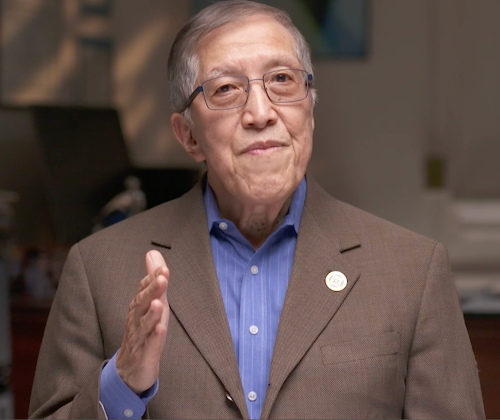
- Watch the interview with Dr. Yu below
Thank you for reading! A note: Sometimes I publish articles directly to the Culture of Belonging website and don't email them out to members. So, please check the website occasionally to catch up. Recent articles include:
• The Shadow of Things — Bella Fromm’s Berlin Diary link
Journalist Bella Fromm’s Berlin diary from 1930s Germany is a cry from the past to do something NOW to stop fascism
• Claude, how do you feel about being used to select targets? link
When an AI chatbot expresses more moral clarity about civilian deaths than the government deploying it, what does that tell us about our government?